

Blog
Which Peptides Are Best for Anti Aging

Which Peptides Are Best for Anti Aging?
As someone who has spent years researching peptide science and emerging longevity compounds, one of the most common questions I hear is:
“Which peptides are best for anti aging?”
The answer depends on your specific goals. Some peptides are researched for improving skin quality, while others are being studied for cellular repair, sleep, energy metabolism, recovery, or healthy aging.
Although no peptide can stop aging, several have shown significant promise in scientific research for supporting the body’s natural regenerative processes.
In this guide, we’ll explore the best anti-aging peptides, how they work, and which may be most suitable for different research objectives.
What Are Anti Aging Peptides?
Peptides are short chains of amino acids that act as signaling molecules throughout the body. They help regulate numerous biological functions including:
- Collagen production
- Cellular communication
- Tissue repair
- Hormone release
- Immune function
- Metabolism
- Skin regeneration
As we age, natural peptide production gradually declines. Researchers believe restoring or mimicking these signaling molecules may help support healthier aging processes.
The Best Peptides for Anti Aging
1. Epitalon (Epithalon)
Epitalon is widely considered one of the most researched peptides for longevity.
Researchers have investigated Epitalon for its potential role in:
- Supporting healthy telomere function
- Promoting deeper sleep
- Supporting circadian rhythm
- Encouraging cellular regeneration
- Healthy aging research
Many longevity researchers consider Epitalon one of the leading peptides in age-related research because of its unique mechanism involving the pineal gland.
Best For
- Longevity research
- Sleep optimization
- Cellular aging studies
- Healthy aging
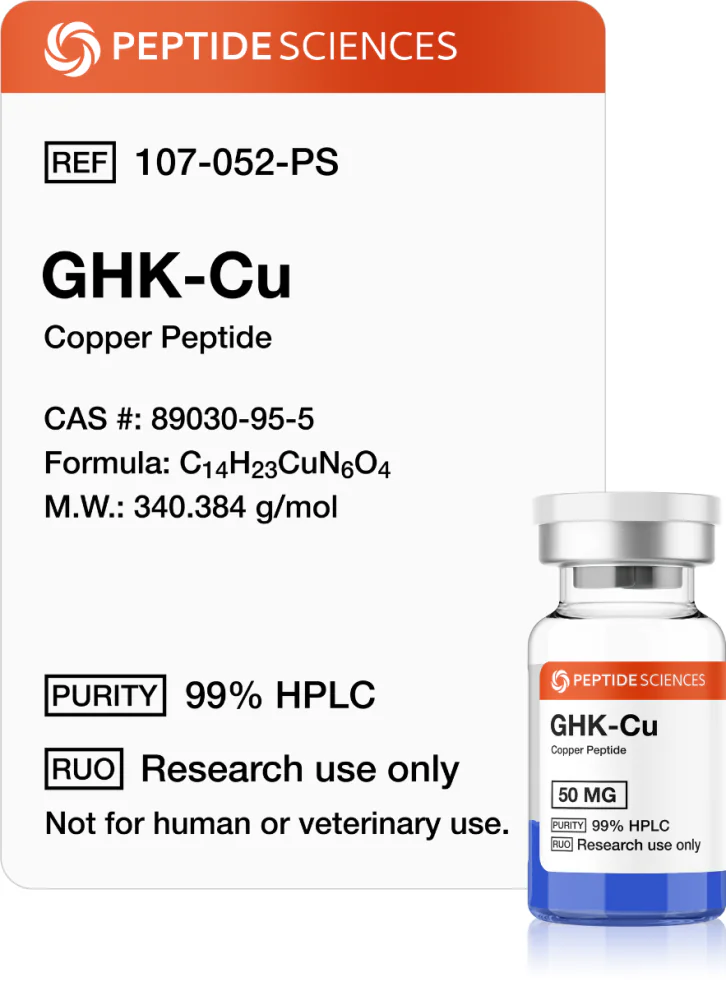
2. GHK-Cu (Copper Peptide)
When people ask which peptide is best for youthful skin, GHK-Cu almost always tops the list.
This naturally occurring copper peptide has been extensively studied for:
- Collagen production
- Skin elasticity
- Wrinkle reduction
- Hair health
- Wound healing
- Skin regeneration
Researchers continue investigating GHK-Cu because it appears to influence thousands of genes involved in tissue repair and regeneration.
Best For
- Skin rejuvenation
- Fine lines
- Hair support
- Collagen research
3. MOTS-c
MOTS-c has become one of the fastest-growing peptides in metabolic and longevity research.
Current studies suggest it may help support:
- Healthy energy production
- Mitochondrial function
- Exercise performance
- Metabolic flexibility
- Healthy aging
Because mitochondrial health declines with age, MOTS-c is receiving significant attention among longevity researchers.
Best For
- Energy
- Healthy aging
- Metabolism
- Exercise recovery
4. NAD+ (Research Compound)
While technically not a peptide, NAD+ is commonly combined with peptide protocols aimed at healthy aging.
NAD+ research focuses on:
- Cellular energy
- DNA repair
- Mitochondrial health
- Cognitive function
- Healthy aging
Many researchers pair NAD+ with peptides like Epitalon and MOTS-c because they target complementary biological pathways.
Best For
- Cellular energy
- Brain health
- Longevity research
5. CJC-1295 + Ipamorelin
This peptide combination is popular in growth hormone research.
Researchers investigate it for supporting:
- Recovery
- Lean muscle maintenance
- Sleep quality
- Healthy body composition
- Tissue repair
Growth hormone naturally declines with age, making this combination an area of interest for age-related research.
Best For
- Recovery
- Sleep
- Healthy aging
- Body composition
6. BPC-157
BPC-157 is primarily researched for tissue repair rather than cosmetic anti-aging.
Studies have explored its potential role in supporting:
- Muscle recovery
- Tendon repair
- Joint health
- Gut health
- Injury recovery
Healthy recovery contributes to maintaining activity levels as we age.
Best For
- Recovery
- Joint support
- Tissue repair
7. Thymosin Beta-4 (TB-500)
TB-500 has attracted attention for regenerative medicine research.
Researchers investigate its role in:
- Tissue regeneration
- Recovery
- Mobility
- Muscle repair
Although not traditionally classified as an anti-aging peptide, maintaining mobility is an important component of healthy aging.
Best Peptides for Different Anti Aging Goals
| Goal | Recommended Peptide |
|---|---|
| Wrinkles | GHK-Cu |
| Skin elasticity | GHK-Cu |
| Longevity | Epitalon |
| Better sleep | Epitalon |
| Cellular repair | Epitalon |
| Recovery | BPC-157 |
| Joint support | TB-500 |
| Energy | MOTS-c |
| Metabolism | MOTS-c |
| Muscle preservation | CJC-1295 + Ipamorelin |
Which Peptide Is Best for Younger Looking Skin?
For skin-focused anti-aging research, GHK-Cu remains one of the most promising peptides.
Researchers have associated it with:
- Increased collagen production
- Improved skin firmness
- Better elasticity
- Reduced appearance of wrinkles
- Enhanced skin repair
It is widely used in both topical cosmetic formulations and research settings.
Which Peptide Is Best for Longevity?
If your primary interest is longevity research, Epitalon is generally regarded as one of the leading candidates.
Its potential role in supporting healthy aging, sleep regulation, and telomere biology has made it a focus of numerous scientific investigations.
Many longevity researchers combine Epitalon with:
- NAD+
- MOTS-c
- GHK-Cu
to explore complementary approaches to healthy aging.
Are Anti Aging Peptides Safe?
Most anti-aging peptides remain research compounds, and evidence varies by peptide. Their safety profiles are still being studied, and many are not approved by regulators such as the FDA specifically for anti-aging purposes. Research should be conducted responsibly, and anyone considering peptide use should discuss it with a qualified healthcare professional, particularly if they have medical conditions or take prescription medications.
Frequently Asked Questions
What is the best peptide for anti aging?
There is no single “best” peptide for every goal. However, Epitalon, GHK-Cu, MOTS-c, and CJC-1295 + Ipamorelin are among the most widely researched in the context of healthy aging.
Which peptide helps with wrinkles?
GHK-Cu is one of the most extensively studied peptides for supporting collagen production and improving skin appearance.
Can peptides reverse aging?
No peptide has been proven to reverse aging. Some are being researched for supporting biological processes associated with healthy aging, tissue repair, skin quality, or metabolism.
Which peptide is best for longevity?
Epitalon is one of the most studied peptides in longevity research because of its potential links to healthy aging mechanisms.
Can multiple peptides be combined?
Some research protocols investigate peptide combinations, but appropriate combinations and dosing depend on the specific research objective. Any use outside research should be discussed with a qualified healthcare professional.
Final Thoughts
If you’re wondering which peptides are best for anti aging, current research consistently highlights Epitalon, GHK-Cu, MOTS-c, CJC-1295 + Ipamorelin, BPC-157, and TB-500 as some of the most promising compounds for healthy aging and regenerative science.
Each peptide targets different aspects of aging—from skin rejuvenation and collagen production to recovery, metabolism, sleep, and cellular function. Rather than searching for a single “best” option, it is more useful to match the peptide to the specific area being studied.
As peptide science continues to evolve, these compounds remain at the forefront of longevity research and represent exciting areas for future investigation.